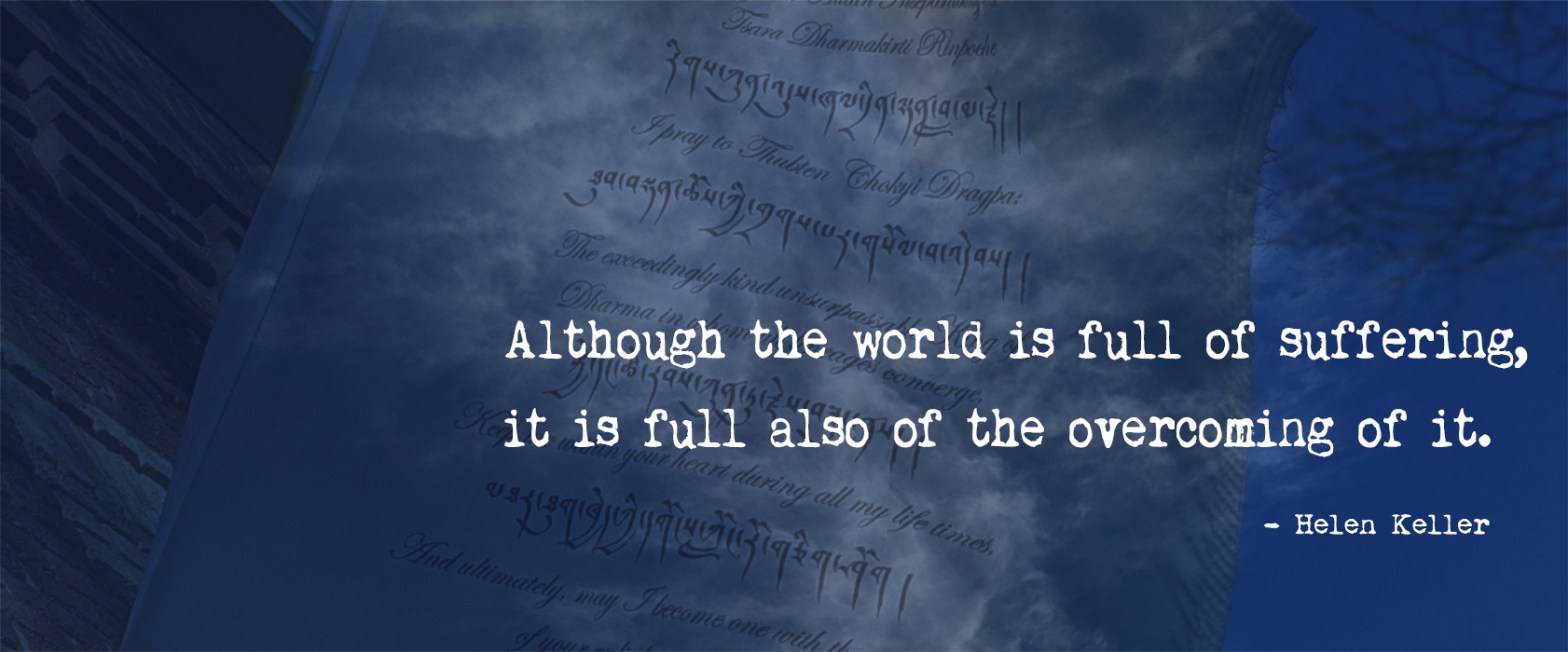
I should probably stop worrying so much about blogging perfection. That’s not the point of this exercise, after all. And I need to keep the words flowing as they are helping me make sense — or at least work through — what has been happening to me.
We write what we know. This I know.
Orofacial clefts are fairly common in the US, affecting approximately 7500 babies each year.
According to the Cleft Palate Foundation, one out of every 1,509 babies are born with isolated cleft palates, while one out of every 902 babies are born with cleft lip, with or without cleft palate. The trouble with my particular cleft — palate only — was that the doctors didn’t find it until I was close to four years of age. Somehow no one seemed to notice that my speech was fraught with nasality and I could not shape consonants. It wasn’t until I had my tonsils out that the cleft palate was discovered, triggering a series of events that led me to the Lancaster Cleft Palate Clinic in Pennsylvania, and Dr. Mohammed Mazaheri.
My Mother was charged with driving me to Lancaster from Canton, Ohio, at least once a year, but usually twice. To their credit, my parents sought out and found what was then the premier center for orofacial clefts in the country. I spent a good deal of time being fitted for an appliance, which looked like a retainer but with a ovular ball attached to the back end. That ball pushed up my useless bi-fed uvula and blocked air from exiting my nose. This helped me speak more clearly, but it also required killing my gag reflex. Fitting me for the appliance was not fun. My small mouth felt like it was being overwhelmed by this new contraption. It hurt. I could eat only soft foods for several days, and my Mom would treat me to Zimmerman’s Family Restaurant on Queen Street, where I’d eat lemon meringue pie for lunch.
As the years went by, I began to understand how this birth defect (I use the term loosely– “defect” is relative) created a cascade effect in my head that involved my Eustachian tube, ears (particularly my right ear), sense of balance and sinus problems. My childhood was spent dealing with recurrent ear infections, which led to an ENT putting tubes in my ears and to my taking doses and doses of grape-flavored Dimetapp, a decongestant. To this day I still abhor anything grape flavored.
One day when I was about 11, I was sitting on the couch in the family room when I felt something weird in my right ear. Soon enough the “tube” that had tried to drain my drum rolled out. It was a small green cylinder, cinched at the waist. I marveled at it, caked with wax and puss. So lovely. So not working.
By the time I was 14, I struggled with near-constant ear pain, congestion and overall lethargy. My body had been fighting a low grade infection for who knows how long, and I couldn’t seem to get my ear doctor to treat the underlying cause. He kept saying I needed surgery, but would put it off, make some excuse, while I just kept feeling like shit. My Mother, who took me to all of my doctor appointments, didn’t believe me when I cried out in pain during an exam. The ENT said “I’m barely touching you, that can’t be painful,” to which I replied, through tears and disbelief, “It is.” My Mom stood near the door to the exam room, her arms crossed, a look of annoyance on her face. “Let’s not play games,” she said.
I had to take matters into my own hands. And so the next week, while at school, I made myself fall within sight of the study hall doors. I told the principal I was dizzy and my head hurt. Soon thereafter my Mom took me to see another specialist, this time in Akron. He said I definitely needed surgery, but to perhaps take me to the department of otolaryngology at The Cleveland Clinic.
My doctor at the Cleveland Clinic had just come to the United States from Israel; he was a “teaching doc,” so he often had med students join him on his rounds. When I arrived in his office, he took one look at my ear and asked my mother how I was even standing up. I was admitted to the hospital that day, where I remained for three weeks.
On October 31, 1995, I underwent a radical mastoidectomy. All of my bones of hearing and ear drum on my right side were taken out. The cholesteotoma that had been growing in that ear for far too long (imagine a tumor with webs of disease taking over my entire ear) was cleared out, and I actually had better hearing post-op, through the mastoid bone, then I did before the surgery.
I went home to recover, but my time away from the Clinic was short, as I began to experience facial paralysis, and soon the entire right side of my face stopped working. I had to tape my eye shut to sleep. I smiled a very crooked smile. I did not shed tears from that right eye.
A course of steroids decreased the inflammation of my facial nerve and slowly I gained back control of my facial muscles. But this was just the beginning of a long, drawn out series of medical problems I would experience in my life. And though I believe that dealing with so many body/mind issues led me to develop a deep wellspring of empathy, I can also say that health issues have beaten my ass down and created truck loads of hopelessness and despondency over the years.
Since that first ear surgery, I’ve had countless sinus infections, some lasting months at a time, two sinus surgeries (one was a septoplasty for an extreme deviation and and it was absolute hell), and a hysterectomy. Turned out that the fibroids I had in my uterus were huge, and one in particular was worrying my gynecologist. It didn’t look right to her, and she wanted it out, fast. Her hunch was right: Once biopsied, the fibroid was found to have cells consistent with uterine sarcoma. My doctor told me that she’d seen this particular presentation in two patients in 25 years, and lucky me, I was one.
I don’t like to separate the mind from the body–as far as I’m concerned, they are one entity, and illness is illness. I use the term “mental illness” as a catch all, but it’s woefully inadequate. It’s one of the things that perpetuates this notion of a diseased mind that is unpredictable, dangerous, “crazy.”
The fact is that I began exhibiting symptoms of mental distress (better term) when I was about 15. My mother was fighting breast cancer, and would soon undergo a double mastectomy with reconstruction (saline implants). My grandmother, with whom I was exceedingly close, was dying. I had older siblings who wanted zero to do with me, and a father who was checked out emotionally.
Was I “pushed” into bipolar process as a result of these things? I’ll never know. But I do know I was coming home from school and sleeping well into the evening, rising only to eat dinner because I had to show up at the table or else. I lied, a lot. I spun stories to try and make sense of the inferno that was in my brain. I had a massive crush on my French teacher, who happened to be a woman. I told her I was having an affair with a much older man who lived in California. That sure got her attention! At the bottom of it all was an ugly, terrifying secret locked up tight: Starting in 4th grade, desperately seeking male approval, I’d unwittingly become a sex toy for several horny neighborhood boys. My first first blowjob was at 10. I have no idea how I even knew what to do, but I was a quick study. And then, at 13, I was sexually molested by a 23 year old man. Yes, I wanted it. I wanted to be loved. I wanted to be seen. This is irrelevant, of course. That man had the power, and I was just a kid. Pedophiles know exactly what they are doing. I understand that now.
At 18, when I finally told two members of my family about the abuse, I was not believed. “You can’t be 13 and call it abuse,” I was told. And so I stopped believing myself. I also stopped telling people about what happened to me. For more than twenty years, I told myself the abuse was my fault.
It wasn’t until I moved to Colorado that I finally dealt with my mental distress, as well as the reality that I had been violated by a man whom I trusted. I had to deal with it: I’d landed an awesome job and needed to be clear-headed, healthy, present. Thanks to a very smart, intuitive psychiatric nurse practitioner, I was able to get on the right medication and soon began to feel more even, less strung out emotionally, more in control. There was less self-sabotage, more exercise, fewer mood swings and crying jags. Better concentration. I slept soundly for the first time in my life.
Still, I kept dealing with persistent back problems that sometimes got so bad that I couldn’t stand up. This went on for years, and I tried every modality imaginable–it wasn’t until I found a certified Rolfing practitioner that I was able to get some relief. Eventually, even that didn’t do the trick. For almost a decade, I learned to live with constant, nagging pain. NSAIDs helped, to a degree, as did consistent movement, like walking or riding my bike. I learned to keep the worst pain at bay, but I also convinced myself that this was my lot in life: chronic pain. Deep down, I held tight to a tether of self-blame and deep shame, and pain was my penance.
Undoubtedly this was one of the major contributors to my succumbing to a major depressive episode in 2015. Four solid months of the worst psychic pain imaginable. I truly wanted to die. For someone who was regularly obsessed with her weight, losing more than 30 pounds was just something that happened to me, and I didn’t care either way. A tweak of my meds brought me back to my life, but I will never, ever forget what it felt like be so outside of myself, weighed down by a suit of darkness that I could not shed. Depression is visceral and relentless. It’s heavier than anything I’ve ever carried, and I don’t think I’ll ever be free from worrying about its return.
The daily pain persisted. Even moving in bed, turning over, hurt like a bitch. My back would spasm to the point where I was immobilized and afraid to lift a finger. If I turned my neck the wrong way, shooting pain moved down into my shoulder. On those days and nights when my sciatic nerve went haywire and I wanted to stick a hot poker in the crease between my leg and my butt, I took Neurontin. It was the only thing that worked outside of narcotics, and those I would not touch.
Something had to change. And just last week, it did, though it came in the form of a life-changing diagnosis.
After numerous tests and many years of “suspecting” I may have an underlying condition that was creating seemingly-unconnected health problems–recurring iritis, urinary issues, GI discomfort, intense joint pain, bone spurs, arthritis–I was formally diagnosed with an auto-immune disease, ankylosing spondilitis (AS).
AS is a condition of the spine, a rare type of arthritis that causes pain and stiffness. It’s also known as Bechterew disease, and usually starts in your lower back, but can spread up to your neck or damage joints in other parts of your body. It’s an inflammatory process that can do serious damage to your heart or other organs if left untreated. My C-reactive protein, which helps measure inflammation in the body, is at a 19 right now; normal levels range from 0-3. My body has been fighting this illness for quite some time, but diagnosing AS can be very tricky. My case is pretty textbook, though. That’s the good and bad of it.
And so. I have to start taking immunosuppressive drugs to try and get my body’s immune system to calm the hell down. Right now it’s attacking deteriorated discs in my spine and growing bone around them. Stopping that may help reduce the amount of stiffness I will experience, and I may be able to avoid being wheelchair-bound by the time I’m 60. I’ll have to administer self-injections every two weeks, and my insurance company has told me how fortunate I am that I will only pay $127 a month for this “specialty medication” because their out-of-pocket expense is $5200. Good god.
Am I tired of being sick and tired? Absolutely. This diagnosis hit me hard, and I’m still reeling from it. But maybe, just maybe, I can get to a point where pain stops catching a ride in my sidecar, despite my repeated attempts to kick it out. Maybe I can tackle hiking those 13ers this summer after all. Maybe I don’t deserve to be punished ad nauseam for things I couldn’t control, things I did to survive the hand I was dealt, or the mistakes I made to try and find love and acceptance.
Maybe the path to relief is cleared for travel.
 Everything is Always Over
My profound and pithy comment evaporated. So I’ll keep it short: I see you and have your back.
LikeLike